House Committee on Un-American Activities
American PrometheusThe House Committee on Un-American Activities was a congressional investigative body whose scrutiny of left-wing politics reached from public advocacy groups to the scientists associated with Berkeley’s Radiation Laboratory. In the account of J. Robert Oppenheimer’s life, the committee’s influence is most sharply visible in 1949: its investigation of alleged atomic espionage placed his former students, his brother Frank, and Oppenheimer himself before congressional inquiry, turning political affiliations and private associations into questions of national security.
Political scrutiny and the language of subversion
In the late 1930s and early 1940s, Oppenheimer participated in causes that the Communist Party also supported, including civil liberties, better conditions for migratory farm workers, opposition to fascism, and aid to the Spanish Republic. He subscribed to the West Coast paper People’s World; in 1938, he and Haakon Chevalier helped raise money for an ambulance for the Spanish Republic. He later joined the Western Council of Consumers Union, served on the California executive committee of the American Civil Liberties Union, sponsored Friends of the Chinese People, and joined the national executive committee of the American Committee for Democracy and Intellectual Freedom. With the exception of the American Civil Liberties Union, the House Committee on Un-American Activities labeled these organizations Communist front organizations in 1942 and 1944. The designations placed varied forms of political and humanitarian activity under a common suspicion.
The committee also appeared in contemporary arguments over domestic politics. A pamphlet associated with Communist writers criticized the Roosevelt administration for what it described as a reversal: it had once expressed disgust at the committee’s conduct under Martin Dies, the pamphlet said, but was now accommodating reactionaries while attacking organized labor and civil liberties. The passage does not establish that Oppenheimer wrote the pamphlet; it does show how the committee had become a symbol in wider disputes about political repression and the government’s treatment of dissent.
From political affiliations to the Berkeley investigation
The political climate surrounding the committee became more threatening during the 1948 Alger Hiss case. After Whittaker Chambers accused Hiss before the committee of belonging to a secret Communist cell, the dispute became a prominent Republican argument that Communists had penetrated the New Deal foreign-policy establishment. Oppenheimer regarded the case as a warning. He urged Frank, whose Communist Party affiliation was known, to consult a lawyer familiar with Congress and the press. Frank had previously denied that affiliation in a newspaper statement and then, fearing for his position at the University of Minnesota, had repeated the denial in writing.
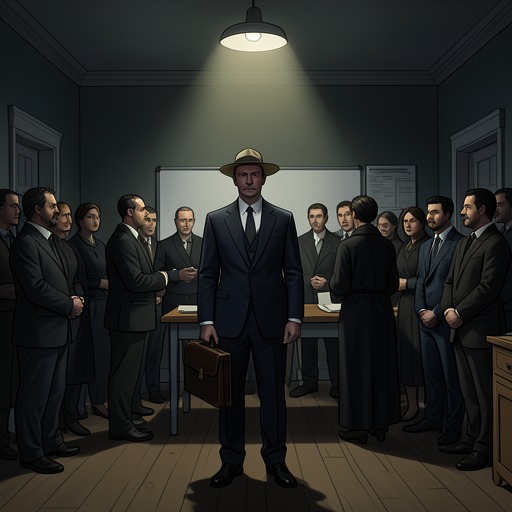
In the spring of 1949, the House Committee on Un-American Activities began a major investigation of alleged atomic spying at Berkeley’s Radiation Laboratory. Four former students of Oppenheimer—David Bohm, Giovanni Rossi Lomanitz, Max Friedman, and Joseph Weinberg—received subpoenas. The committee’s investigators knew that a wiretap had recorded Weinberg speaking with Steve Nelson about the atomic bomb in 1943. Yet the committee’s counsel recognized that a warrantless wiretap would not hold up in court. On April 26, the committee brought Weinberg face-to-face with Nelson; Weinberg denied ever having met him. The investigators believed he had lied, but knew that establishing it would be difficult, and hoped to build their case through the testimony of Bohm, Friedman, and Lomanitz.
The investigation made Oppenheimer a potential target as well. He had also received a subpoena, and knew that committee member Harold Velde, a former FBI agent, had investigated the Radiation Laboratory in Berkeley during the war. In this setting, an inquiry into espionage did not remain confined to demonstrable transfers of information: testimony about former students’ political views and past associations became part of the committee’s examination.
Oppenheimer’s closed-door testimony
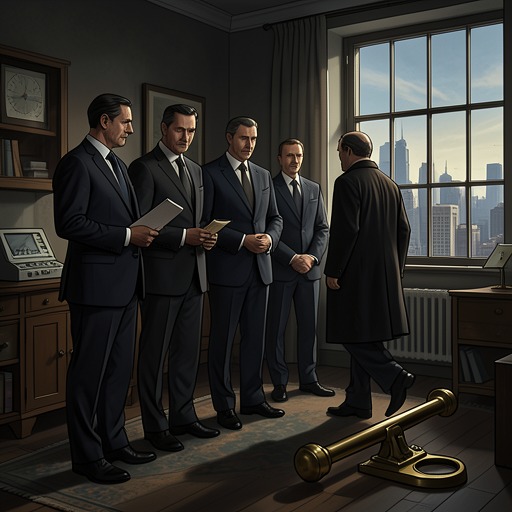
On June 7, 1949, Oppenheimer appeared at a closed executive session of the House Committee on Un-American Activities. Six members of Congress questioned him, including Richard Nixon. Oppenheimer was there ostensibly as chairman of the General Advisory Committee of the United States Atomic Energy Commission, but the committee’s interest was alleged atomic spies rather than nuclear-weapons policy. He was apprehensive, yet chose not to bring a personal lawyer. Instead, he brought Joseph Volpe and introduced him as the commission’s general counsel. Over two hours, Oppenheimer answered questions cooperatively.
The questioning began with whether he knew that a Communist cell existed among scientists at the Radiation Laboratory; he denied such knowledge. He also denied knowing before the war that Weinberg was a Communist, and described Weinberg’s expressed views after the war as not following the Communist line. The committee then asked about Bernard Peters, another former student. Oppenheimer acknowledged that he had described Peters to a Los Alamos security officer as dangerous and quite red. He explained that Peters had belonged to the German Communist Party, fought the Nazis in street battles, been sent to a concentration camp, escaped, and later denounced the Communist Party after arriving in California. Oppenheimer apparently assumed that remarks made in executive session would remain private. His testimony nevertheless placed a former student’s political history and persecution under the committee’s public-facing investigative scrutiny.
Frank Oppenheimer and the demand to name others
The day after Robert’s testimony, Frank appeared before the committee. He explained that his earlier denial had followed a late-night call from a reporter, who read him a story containing many false allegations as well as the true claim that Frank had belonged to the Communist Party. Frank had rejected the story as a whole, a response he later acknowledged was foolish; pressure from the University of Minnesota had then led him to provide a written denial as well.
This time, after discussing the matter with Jackie, Frank testified under oath that he and Jackie had been Party members for about three and a half years, from early 1937 until late 1940 or early 1941. He acknowledged that his Party alias had been Frank Folsom. But he refused to disclose the political views of other people, explaining that he would not talk about his friends. Committee members, including Velde, repeatedly pressed him to justify that refusal and to identify others. Frank’s testimony thus both corrected his earlier false denial and drew a boundary against transferring the committee’s scrutiny to his associates.
Across these episodes, the committee’s reach rested on more than the pursuit of a single espionage allegation. Its inquiries connected organizational labels, political histories, wiretap evidence, and testimony about personal relationships. The 1949 hearings made the consequences concrete for the Oppenheimer family: Robert’s professional standing and former students were drawn into the investigation, while Frank had to choose between candor about his own past and cooperation in naming others.